
Cambridge Property Tax Lookup
Cambridge property tax records include assessments, ownership data, exemptions, and billing details for every parcel in the city. The Cambridge Assessing Department keeps these records current and offers several online tools for searching property data. Cambridge stands out from most Massachusetts cities because it uses semi-annual billing instead of quarterly, and it offers one of the most generous residential exemptions in the state. This page covers how to look up your records, pay taxes, and apply for relief programs.
Cambridge Property Tax Overview
Search Cambridge Property Records
Cambridge provides multiple ways to look up property tax data. The Cambridge Open Data Assessing portal gives you access to the city's full assessment database. You can search by address, owner name, or parcel ID. Results show assessed values, property class, lot size, building details, and sales history. This is the most complete online tool the city offers for property research.
For a map-based search, the Cambridge AxisGIS system shows parcels on an interactive map with aerial views and lot boundaries. You can click any parcel to pull up its data card. This works well when you know the location but not the exact address, or when you want to compare several properties in the same neighborhood.
The screenshot below shows the Cambridge Assessing Department page, which links to all property lookup tools and exemption information.
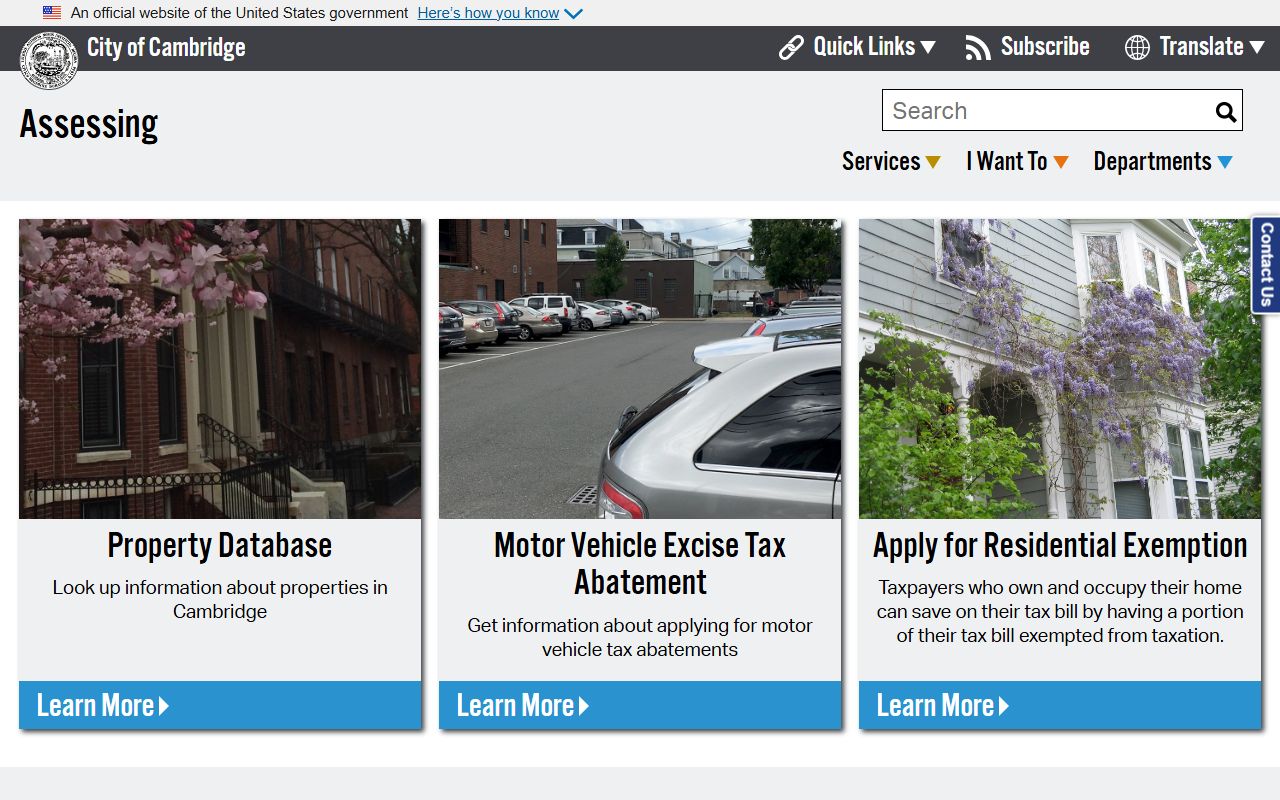
The open data portal is updated regularly and reflects the most recent fiscal year data.
Cambridge Assessing Department
The Cambridge Assessing Department is on the second floor of City Hall at 795 Massachusetts Avenue. Call them at (617) 349-4343. Staff handle all questions about assessed values, tax classification, exemptions, and the appeals process. If you disagree with your assessment, this is where you file your abatement application.
Cambridge has a residential tax rate of $6.67 per $1,000 for FY2026, which is low compared to many Massachusetts cities. The commercial rate is $14.07 per $1,000. Under MGL c. 59, §38, the city must assess all property at full and fair cash value. Cambridge property values tend to be high due to proximity to Boston and the local universities, so even a lower rate can produce substantial tax bills. The city uses a classified system to set different rates for residential and commercial properties.
One thing that sets Cambridge apart is its billing schedule. Most Massachusetts cities bill quarterly, but Cambridge uses semi-annual billing. Tax bills are due in November and May. This means you get two larger bills instead of four smaller ones. Keep that in mind when budgeting for the year.
Note: For payment questions or to check your balance, call (617) 314-8226 or visit cambridgema.gov/paybill.
Cambridge Residential Exemption
The Cambridge residential exemption is one of the biggest in the state. For FY2026, the exemption removes $499,263 from your assessed value before the tax rate is applied. At the current rate of $6.67, that translates to roughly $3,170 in annual savings. To qualify, you must own the property and live in it as your primary residence as of January 1 of the tax year. You need to file an application with the Assessing Department.
This exemption is a huge deal for Cambridge homeowners. Property values in the city are among the highest in the state, with many homes assessed well above $1 million. Without the exemption, tax bills would be much steeper for owner-occupants. The program shifts a portion of the tax burden onto non-owner-occupied properties, including rental buildings and investment properties. Under MGL c. 59, §5, the state authorizes cities to adopt this exemption and sets the framework for how it works.
The statewide image below shows the MassGIS property data portal, which can help you view Cambridge parcels alongside statewide property data.
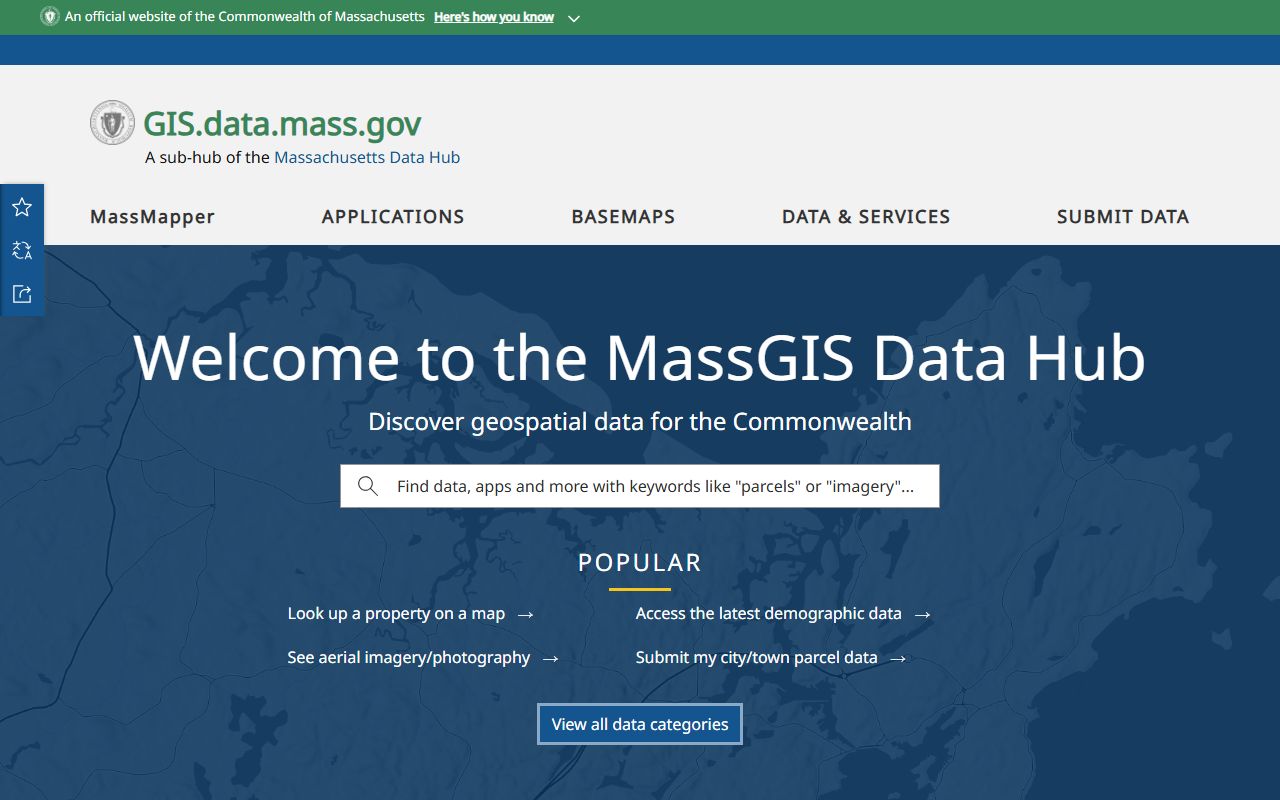
The MassGIS system covers all cities and towns in the state.
Tax Payment and Appeals
Cambridge tax bills are due twice a year: November and May. You can pay online at cambridgema.gov/paybill, by phone at (617) 314-8226, in person at City Hall, or by mail. E-check payments are free. Card payments have a convenience fee. Late payments trigger interest at 14% per year, which is set by state law and applies uniformly across Massachusetts.
If you think your property is assessed too high, you can file for an abatement. The deadline is usually April 1 or within three months of when tax bills were mailed. You file Form ABT with the Assessing Department. Under MGL c. 59, §59, every property owner has the right to seek a reduction if the assessment exceeds fair market value. If the local board denies your request, you can appeal to the Massachusetts Appellate Tax Board. Many homeowners in Cambridge file abatements after significant value increases, so the process is well-established here.
Cambridge also participates in the state's Senior Circuit Breaker Tax Credit program, which puts up to $2,820 back to qualifying seniors through their state tax return. Other exemptions include Clause 41C for elderly owners, veterans exemptions, and blind person exemptions. Each has its own income and asset thresholds.
Middlesex South Registry of Deeds
Deed records for Cambridge are kept at the Middlesex South Registry of Deeds in Cambridge. The registry records all property transfers, mortgages, liens, and easements. When a property changes hands, the new deed is recorded here and the city assessors use that information to update their ownership records.
You can search the registry online for free. The database covers documents going back decades. For very old records, you may need to visit the office in person. Certified copies carry a per-page fee. The registry is a good resource when you want to verify ownership, check for liens, or trace the history of a property. Under MGL c. 59, §21C, Proposition 2 1/2 limits the total tax levy increase to 2.5% per year plus new growth. This law works alongside the assessment process to control how much Cambridge can collect in total property taxes each year.
Note: Registry searches are free to view online, but certified copies require a fee paid to the registry office.
Nearby Cities
Cambridge shares borders with several cities that also maintain their own property tax records.
Middlesex County Resources
Cambridge is in Middlesex County. The county page covers registry details and property tax tools for all towns in the county.