
Nantucket County Property Tax Lookup
Nantucket County property tax records are all managed by a single town government since the county and town share the same boundaries. The island has some of the highest property values in Massachusetts but the lowest residential tax rate in the state at $3.28 per $1,000. You can search Nantucket property tax records through the town assessor's office, look up deeds at the Registry of Deeds, and pay taxes online or in person. This page covers the offices, rates, exemptions, and tools you need to find and understand Nantucket property tax data.
Nantucket County Property Tax Overview
Nantucket Registry of Deeds
The Nantucket County Registry of Deeds is at 16 Broad Street in Nantucket. The phone number is (508) 228-7250. Office hours are Monday through Friday, 8:00 AM to 4:00 PM. All deed recordings, mortgage filings, and lien documents for the island go through this office. It is a small operation compared to mainland registries, but it handles the full range of property documents for every parcel on Nantucket.
Online deed searches are available through MassLandRecords.com. You can look up deeds, mortgages, and other recorded documents by name, address, or document type. Viewing is free. Certified copies cost extra and you can get them by contacting the registry. For title research on Nantucket, this is the go-to tool. The database is the same statewide system used by every county registry in Massachusetts, so the search process is familiar if you have used it elsewhere.
| Address | 16 Broad St, Nantucket, MA 02554 |
|---|---|
| Phone | (508) 228-7250 |
| Hours | Mon-Fri 8:00 AM - 4:00 PM |
Nantucket Property Tax Records Search
The Nantucket Assessor's Office is located at 37 Washington Street. The phone number is (508) 228-7200. This is your main source for property tax records on the island. The assessor maintains current and prior year assessed values, property cards, and exemption data for all 14,071 real property parcels in Nantucket. You can call the office or visit in person during business hours to request records.
Nantucket property data is also available through the town's online systems. The assessor's page on the Nantucket town website links to the property lookup database where you can search by owner name, address, or parcel ID. Results show the assessed value, land use code, lot size, building details, and the tax amount for the current fiscal year. It is free to search and no account is needed.
For fiscal year 2025, Nantucket has 14,071 real property parcels and 7,720 personal property accounts. The total taxable value across the island is $38.85 billion, which makes Nantucket the fourth highest total assessment in the entire state. That number is remarkable for a single-town county with a year-round population well under 15,000.
The Great Point Properties tax rate page provides a clear breakdown of historical and current Nantucket property tax rates alongside the residential exemption amounts.
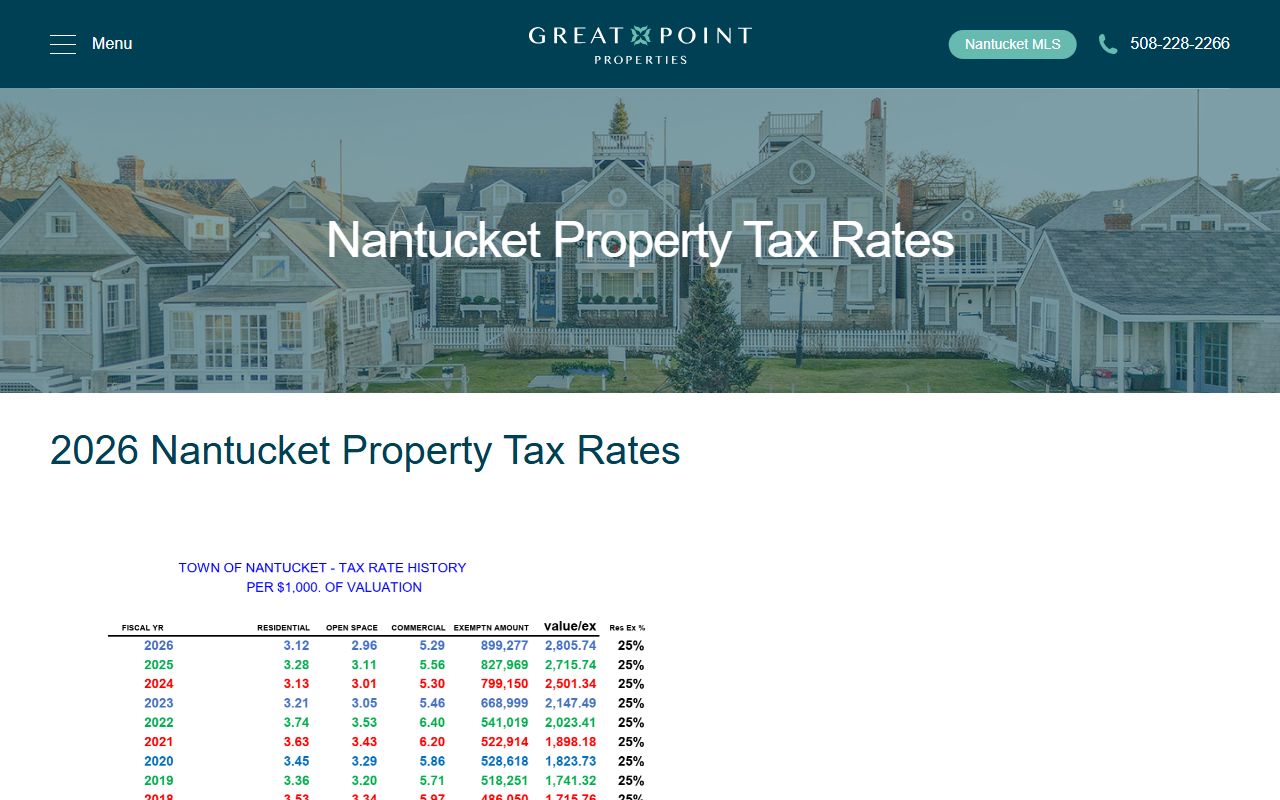
This chart shows how Nantucket's tax rate has stayed low relative to the rest of Massachusetts, largely because the massive tax base spreads the cost across high-value properties.
Note: Nantucket's low tax rate does not mean low tax bills; high assessed values can still result in substantial annual property tax amounts.
Nantucket Tax Rates and Assessments
Nantucket's fiscal year 2025 residential tax rate is $3.28 per $1,000 of assessed value. That is the lowest residential rate in Massachusetts. The commercial rate is $5.56 per $1,000. Nantucket uses a classified tax system, which means residential and commercial properties pay different rates. The town adopts new rates each year after the state Department of Revenue certifies the assessments.
The low rate is possible because of the enormous tax base. With $38.85 billion in total taxable value, even a small rate generates enough revenue to fund town services. Most properties on the island are worth well above the state average. A home assessed at $2 million, which is not unusual here, would pay about $6,560 in residential taxes at the current rate. That same home in a town with a $15 rate would owe $30,000. Context matters when comparing rates.
All Nantucket properties are assessed at 100% of fair cash value as required by MGL c. 59, §38. The town completes revaluations on the schedule set by the Department of Revenue, typically every three years with interim adjustments. Given how fast Nantucket real estate moves, these updates matter. Sales data from the prior year heavily influences each new round of valuations.
For more context on how Nantucket rates compare and what drives them, the Fisher Nantucket tax rate FAQ page answers common questions about the island's property tax structure.
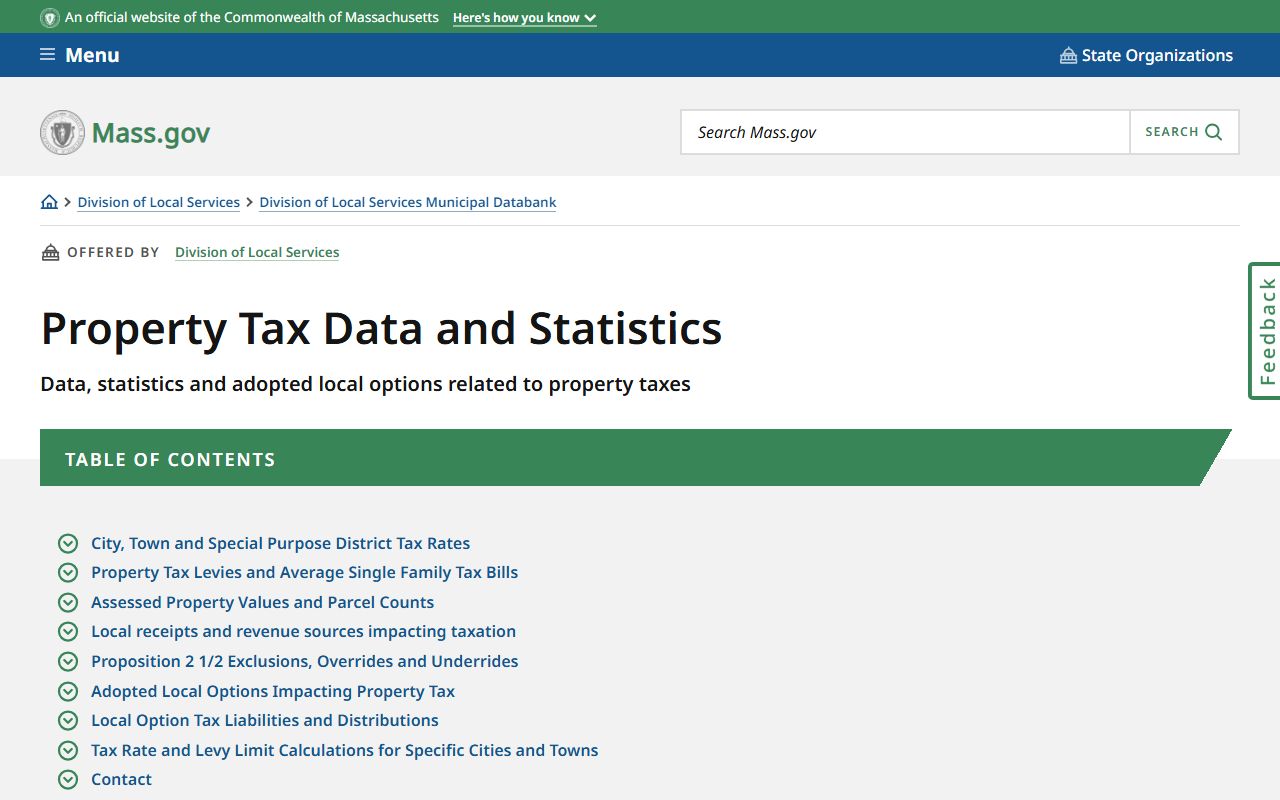
The state DLS property tax data portal is another way to look up Nantucket's rates and compare them to other Massachusetts communities.
Nantucket Residential Exemption
Nantucket offers a residential exemption that benefits year-round homeowners. The town sets the exemption at 25% of the average residential assessed value. That percentage gets applied before the tax rate, so it reduces the taxable value of your home. The dollar amount of the exemption changes each year as average values shift. To qualify, you must own the property and occupy it as your primary residence as of January 1 of the tax year. Details are on the Nantucket Residential Exemption page.
On an island where seasonal homes dominate, this exemption makes a real difference. It shifts tax burden from full-time residents to seasonal and investment property owners. If you live on Nantucket year-round, applying for this exemption is one of the most important things you can do to lower your tax bill. The application goes through the assessor's office at 37 Washington Street. File by the April 1 deadline with proof that the home is your primary residence.
Nantucket Tax Payment Options
Nantucket bills property taxes quarterly. Due dates are August 1, November 1, February 1, and May 1. You have several ways to pay. The UniPay online portal accepts electronic payments. You can also mail a check to PO Box 981004, Boston, MA 02298. In-person payments are accepted at 37 Washington Street during business hours. There is also a drop box at Town Hall for after-hours payments.
Credit card and debit card payments through UniPay carry a convenience fee. E-check payments are typically free or lower cost. If you prefer to pay by mail, send the payment stub with your check well before the due date. Allow extra time during summer months when mail service to the island can be slower than usual.
Late payments are charged 14% annual interest from the due date. That is the statewide rate set by law. On Nantucket, where tax bills can be significant even at a low rate, interest adds up fast. After sustained nonpayment, the town can place a tax lien on the property. Given how valuable Nantucket real estate is, the town takes collections seriously and liens are pursued on schedule.
Exemptions and Tax Relief on Nantucket
Beyond the residential exemption, Nantucket property owners may qualify for additional tax relief under MGL c. 59, §5. The standard programs are available here just as they are in every Massachusetts town. Seniors 65 and older may qualify for Clause 41C. Veterans with service-connected disabilities have several options depending on disability rating. Blind residents get relief under Clause 37A. Surviving spouses qualify under Clause 17D.
The Senior Circuit Breaker tax credit is a state income tax credit, not a local exemption. It is worth up to $2,820 for qualifying seniors whose property taxes exceed 10% of their income. You claim it on your state tax return. For Nantucket seniors on fixed incomes, this credit can provide meaningful relief on top of any local exemptions. Proposition 2½ under MGL c. 59, §21C also limits how much the town can raise its total tax levy each year, which provides a cap on overall tax growth for all property owners.
Abatement Process for Nantucket Property
If you think your Nantucket property assessment is wrong, you have the right to challenge it. File Form ABT with the assessor's office by April 1. The form asks for basic information about the property and your reason for requesting a lower value. Include evidence. Recent sales of comparable properties on the island, photos showing condition issues, or an independent appraisal all help. The assessor has three months to act on your request.
If the assessor denies your abatement or does not respond in time, you can appeal to the Massachusetts Appellate Tax Board. The ATB handles disputes that cannot be resolved locally. For Nantucket, where a small change in assessed value can mean thousands of dollars on the tax bill, it is worth pursuing an abatement if you have good evidence. The assessor's office at 37 Washington Street can explain the process and give you the forms you need.
Nearby Counties
These counties are near Nantucket and have their own property tax records pages.