
Springfield Property Tax Records
Springfield property tax records hold details on assessed values, ownership, tax bills, and exemptions for every parcel in the city. The Springfield Assessing Department manages these records from City Hall and makes assessment data available for public review. Springfield has some of the highest residential tax rates in the state, which means even small changes in assessed value can have a real effect on what you owe each year. This guide walks through how to search records, pay your bill, and apply for exemptions.
Springfield Property Tax Overview
Search Springfield Property Records
The Springfield Assessing Department website is the starting point for any property tax lookup. From there, the city provides access to its online property database where you can search by address or owner name. Results show the assessed value of a property, its classification, the land and building values broken out, and other details that feed into the tax bill. This is the tool to use when you need a quick answer on what a property is assessed at or who owns it.
Springfield also ties into the statewide MassGIS mapping system. The Massachusetts Interactive Property Map lets you pull up parcels in Springfield and see basic assessment data, lot lines, and aerial views. It is not as detailed as the local database, but it gives you a good visual overview and can help you identify parcels by location when you do not have a street address handy.
The image below shows the Springfield city website, which links to the assessing department and other property-related services.

Bookmark the assessors page. It is the fastest way to check your bill or assessment each year.
Springfield Assessing Department
The Springfield Assessing Department handles all property assessments in the city. Their office is at 36 Court St, Springfield, MA 01103. You can call them at (413) 787-6025 or email assessors@springfield-ma.gov. The office can answer questions about your assessed value, help you understand your tax bill, and guide you through exemption applications. If you think your property has been assessed too high, this is where the process starts.
Under MGL c. 59, §38, all property in Massachusetts must be assessed at full and fair cash value. For Springfield, the average single-family home is assessed at about $255,800. That means a typical homeowner pays around $4,010 per year at the current residential rate of $15.68 per $1,000. Commercial properties face a much steeper rate of $35.22 per $1,000. Springfield uses a classified tax system, so businesses and residential owners are taxed at different rates. The city has kept this split for years to help shift some of the burden away from homeowners.
The statewide screenshot below shows the MassGIS property data hub, which can be used to look up parcel-level data for Springfield and other cities in the state.
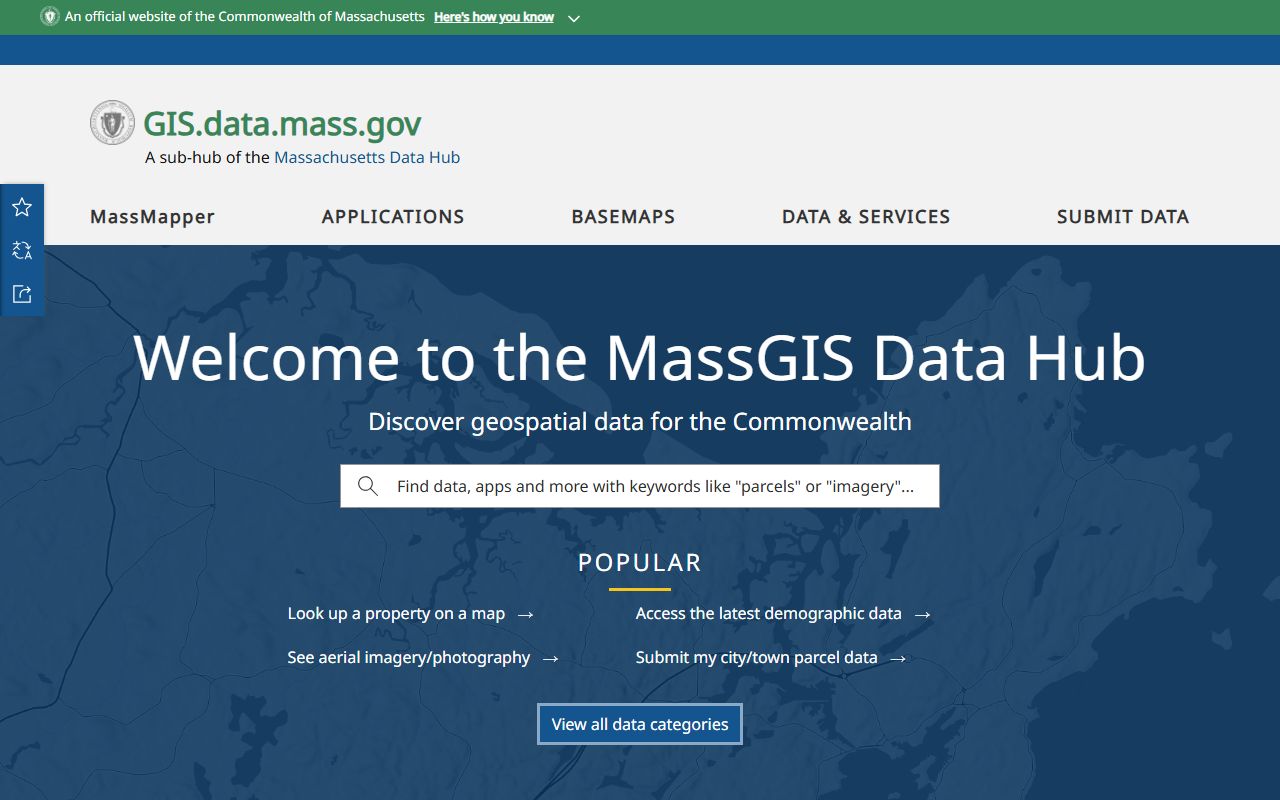
This tool is free to use and covers parcels statewide.
Note: For questions about your actual tax bill or payment, contact the Tax Collector at City Hall Room 112, not the Assessing Department.
Tax Bills and Payment Options
Springfield property taxes are billed quarterly. Bills go out with due dates of August 1, November 1, February 1, and May 1. The Treasurer-Collector office handles all payments. Their office is in City Hall, Room 112, and is open Monday through Friday from 8:30 AM to 4 PM, with extended hours on Thursday until 6 PM. You can pay in person during those hours.
Online payments are accepted through the city's payment portal. You can pay by e-check for no extra cost, or use a credit or debit card with a convenience fee. Mailed payments go to the Treasurer-Collector at 36 Court St, Springfield, MA 01103. Make sure the payment arrives by the due date. The city charges 14% annual interest on late payments, which adds up fast. After extended non-payment, the city can place a tax lien on the property and start tax title proceedings.
If you miss a payment and owe interest, the bill will show the amount due plus accrued charges. There is no grace period. The due date is the due date. If you are struggling to pay, contact the collector's office to ask about payment plans before things escalate.
Exemptions and Tax Relief
Springfield offers several property tax exemptions for residents who qualify. The Springfield property exemptions page lists all available programs and the forms you need to apply. Most exemptions require that you own and occupy the property as your primary home. Applications are due by April 1 each year. Missing the deadline means waiting until the next fiscal year to apply.
Elderly homeowners may qualify for a Clause 41C exemption that reduces their tax bill by $1,000 or more, depending on income and asset limits. Veterans with service-connected disabilities can get reductions ranging from a few hundred dollars to a full tax waiver. Blind property owners get a set exemption amount. Surviving spouses may also qualify for a reduction under Clause 17D. Under MGL c. 59, §5, Massachusetts law spells out each exemption type, who qualifies, and the maximum relief amount.
The state also offers the Senior Circuit Breaker Tax Credit, which can put up to $2,820 back in your pocket through your state tax return. You do not apply to the city for this one. It goes through the Massachusetts Department of Revenue when you file your income taxes.
Note: Each exemption has its own income and asset limits, so check the city's exemption page for the most current thresholds.
Hampden County Registry of Deeds
Deed records for Springfield are held at the Hampden County Registry of Deeds. The registry tracks ownership transfers, mortgage recordings, liens, and other documents that affect property title. When a property sells, the deed is recorded at the registry and that triggers a potential update to the assessed owner on the city's records. You can search the registry online for free.
Springfield falls within the Southern Hampden County Registry district. The online system lets you search by name, address, or document type. You can view recorded documents going back several decades. For older records, you may need to contact the registry office directly. Certified copies of documents carry a fee.
If you want to challenge your assessment, the process starts with the city assessors. You file Form ABT (Application for Abatement) by the deadline, which is usually April 1 or within three months of the date the tax bills were mailed, whichever is later. Under MGL c. 59, §59, property owners have the right to seek an abatement if they believe the assessed value does not reflect fair market value. If the local board denies your abatement, you can appeal to the Massachusetts Appellate Tax Board.
Proposition 2 1/2 in Springfield
MGL c. 59, §21C is the law behind Proposition 2 1/2, which limits how much a city can raise its total tax levy each year. The levy can go up by no more than 2.5% from the prior year, plus new growth from construction and development. Springfield has occasionally sought override votes to exceed this cap for specific purposes, but the base limit still applies. This law is one of the main protections homeowners have against sudden tax spikes.
For a city like Springfield with relatively high tax rates, Proposition 2 1/2 matters a lot. It means the total amount the city can collect from property taxes grows slowly, even if individual property values change. When values go up across the board, the rate may actually drop slightly to keep the total levy within the cap. Conversely, if values fall, the rate can rise. Understanding this helps explain why your tax bill might change even when the rate stays the same.
Nearby Cities
Chicopee is the closest qualifying city to Springfield and shares Hampden County resources.
Hampden County Resources
Springfield is the county seat of Hampden County. The county page covers registry details, assessment practices, and property tax tools for all towns in the county.