
Plymouth Property Tax Records
Plymouth property tax records hold assessment values, ownership information, exemption data, and tax bills for all properties in town. The Assessors Office at 26 Court St manages these records and oversees the annual valuation process. Plymouth uses a single unified tax rate for all property types, which is unusual for a community of its size. This guide explains how to search, pay, and challenge your property taxes in Plymouth.
Plymouth Property Tax Overview
Search Plymouth Property Records
The Plymouth Assessors Office website is the starting point for property tax record searches. The office provides an online database where you can look up parcels by address, owner name, or map and lot number. Search results show the assessed value, property class, lot size, building info, and tax data. The tool is free and open to anyone.
Plymouth is one of the largest towns by land area in Massachusetts. There are thousands of parcels spread across the town, from waterfront homes along the harbor to residential neighborhoods and commercial corridors. The online search tool covers all of them. Each property card breaks down how the assessor calculated the value, including land, building, and any extra features like garages or pools.
You can also use the statewide MassGIS Interactive Property Map to look up Plymouth properties. This tool shows parcel lines, assessed values, and basic data on a map. It covers the entire state. For Plymouth-specific detail, the local assessor database will have more current and complete data.
The image below is from the MassGIS Interactive Property Map, which can be used to view Plymouth parcel data alongside properties in surrounding towns.
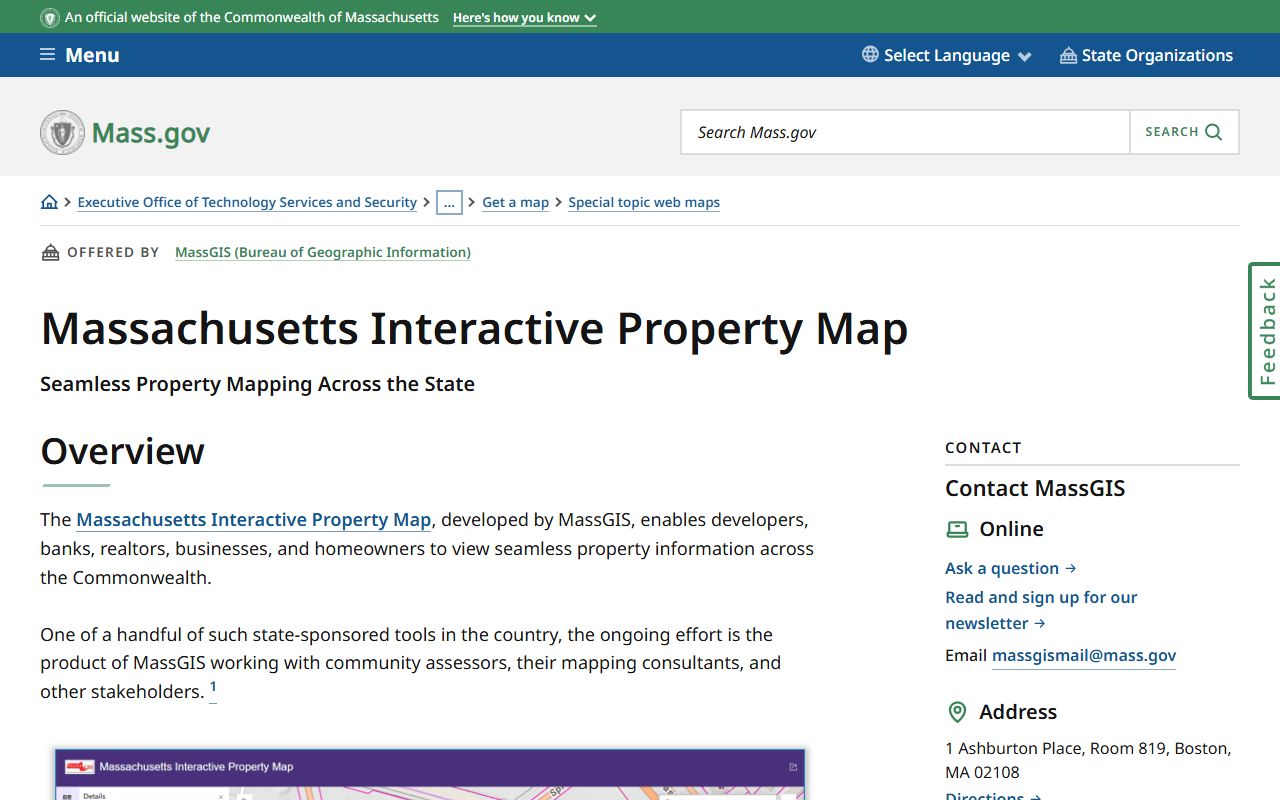
The state map tool updates on a regular cycle but may not reflect the most recent local changes. Always cross-check with the Plymouth Assessors Office for the latest data.
Plymouth Assessors Office
The Plymouth Assessors Office is at 26 Court St, Plymouth, MA 02360. The phone number is 508-322-3430. Staff handle all assessments, exemptions, and abatement filings for the town. Under MGL c. 59, §38, they must assess all property at full and fair cash value each year. The assessment date is January 1 for the following fiscal year.
Plymouth uses a single tax rate for both residential and commercial property. For FY2026, that rate is $12.55 per $1,000 of assessed value. This means a home assessed at the average single-family value of $615,944 would owe about $7,730 in annual taxes before any exemptions. The single-rate approach means residential and commercial properties are taxed at the same level, which is less common than the split-rate systems used in cities like Boston or Worcester.
Tax bills go out quarterly. Due dates are August 1, November 1, February 1, and May 1. Late payments trigger interest at 14% per year. The town can place a lien on properties with unpaid taxes, so staying current on payments matters.
Note: Plymouth's unified rate means there is no separate commercial rate. All property types pay the same $12.55 per $1,000.
Exemptions and Work-Off Programs
Plymouth offers a $1,000 senior exemption for qualifying elderly homeowners. You must be at least 70 years old, own and live in the property, and meet income and asset limits. Applications are due by April 1. Forms are available at the Assessors Office or by calling 508-322-3430.
The town also runs a Senior/Veteran Work-Off Program. This lets qualifying residents earn a credit on their tax bill by working part-time for the town. The amount varies but gives seniors and veterans a practical way to lower their tax burden. Veterans may also qualify for exemptions under MGL c. 59, §5, depending on their service and disability status. Blind residents and surviving spouses have their own exemption categories as well.
At the state level, the Senior Circuit Breaker Tax Credit provides up to $2,820 for homeowners age 65 and over who meet income limits. This is claimed on your state income tax return and works alongside any local exemptions you receive. Many Plymouth seniors qualify for both the local exemption and the state credit, which can add up to meaningful savings.
Paying Taxes and Filing Appeals
Plymouth accepts tax payments online through Invoice Cloud, as well as in person at Town Hall and by mail. Online e-check payments are typically free. Credit cards carry a processing fee. Mailed payments should go to the Treasurer/Collector at 26 Court St, Plymouth, MA 02360. Include your payment stub with the check.
If you think your assessed value is too high, you have the right to appeal. File Form ABT with the Assessors Office. The deadline is generally within 30 days after the third-quarter bill is mailed. Under MGL c. 59, §59, property owners can seek an abatement if the assessed value exceeds fair market value. Gather comparable sales data and any evidence of property condition issues before filing. If the local board denies your claim, you can take it to the state Appellate Tax Board.
The image below is from the Massachusetts property tax law reference page, which outlines the legal basis for property assessments statewide, including Plymouth.
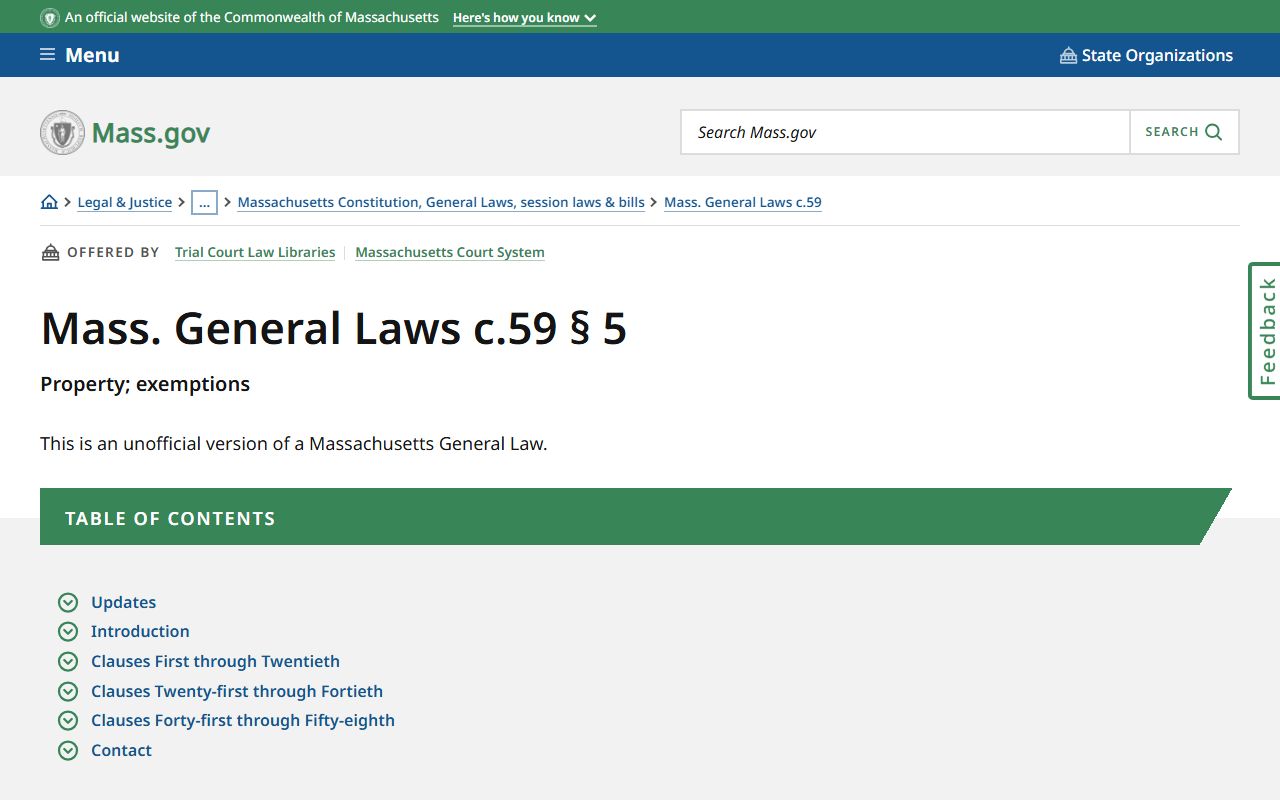
Understanding the legal framework helps when you prepare an appeal. The assessor must follow the same standards outlined in state law.
Plymouth County Registry of Deeds
Deed and ownership records for Plymouth properties are filed with the Plymouth County Registry of Deeds. The registry is at 50 Obery St in Plymouth and has records going back to 1685. You can search deeds, mortgages, liens, and other land records online. The online system covers recent decades. Older records may require an in-person visit.
Property sales in Plymouth get recorded at the registry, and the Assessors Office updates ownership accordingly. The Proposition 2½ law (MGL c. 59, §21C) limits Plymouth's total tax levy increase to 2.5% per year, plus new growth. This cap applies across the entire town, so even when home values rise quickly, the total amount the town can collect grows at a controlled pace. Online deed searches at the registry are free to view, and certified copies are available for a fee.
Note: The Plymouth County Registry at 50 Obery St holds some of the oldest property records in the state, dating to 1685.
Nearby Cities
These cities near Plymouth also maintain searchable property tax records.
Plymouth County Resources
Plymouth is the county seat of Plymouth County. Visit the county page for more on registry offices, tax tools, and assessment practices across the county.